

redfordIn Loving Memory of Robert Redford

(1936 – 2025)

We honor the life and legacy of Robert Redford — an honorary member of the Living with Wolves Board of Directors, a valued contributor to many of our books and films, and above all, a dear friend. Bob and Jim first met in 1978, brought together by a shared love of storytelling and a deep concern for the natural world. That shared purpose would shape a friendship that spanned nearly five decades.

Their early collaboration began when Bob traveled to Sun Valley to work with Jim on his first television documentary. It was during those formative years that Bob taught Jim one of the most valuable lessons of his career: never state the obvious — let the audience draw their own conclusions. When editing a film about cougars, for example, a young lion with bullet wounds was dragged to a pickup truck. Instead of condemning the act in narration, Jim thus chose to let the hunters’ actions speak for themselves — a choice that ultimately left a more powerful impression.

Jim remembers being young and eager to see change, while Bob, older and wiser, taught him to change people’s perspectives through the beauty of the natural world, rather than simply telling them what was right or wrong. That philosophy shaped Jim’s work for decades to come.

Bob’s belief in our mission was unwavering. When asked to serve on the Living with Wolves Board of Directors, he responded with an emphatic “yes!” His wisdom, generosity, and steadfast support left a lasting mark on our work, as well as with anyone who had the privilege to know him.

He will be deeply missed, but his legacy of storytelling, stewardship, and friendship will continue to inspire everything we do.
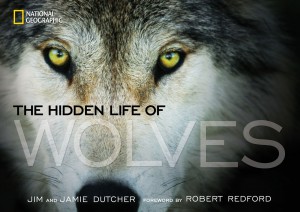
Foreword from The Hidden Life of Wolves

As a traveler crosses the open spaces of America, or watches the majestic high peaks of the West pass beneath the window of a plane, there seems to be no end to wild land. Once millions of bison and elk roamed here, carefully watched by Native Americans . . . and by wolves . . . that depended on those seemingly endless herds for sustenance, for life. It was a world in balance.

When European settlers ventured west, they eyed this same land with a different vision. Bringing with them dreams of prosperity, and the rifles to make conquest a reality, they imagined a virgin world where they, the outcasts and adventurers of the Old World, could become the rulers of this new continent.

These pioneers established themselves as the dominant predator, confronting much of the competition, both animal and human. The barrels of their guns readied the land for the blades of their plows and the arrival of their livestock. Along with their horses and families, their cattle, their sheep, and their hopes for a new life, they also carried old myths and fears from the world they left behind.

To the settlers who invaded their world, wolves were considered bloodthirsty vermin with no redeemable attributes, fit only to be eliminated in the name of progress. Newly available photography showcased frontier marksmen victorious in front of piles of dead wolves, symbols of a West made safe for human settlement.

There aren’t many, if any, examples of man reshuffling the natural order to focus solely on human interests that resulted in a world changed for the better. The replacement of one top predator, the wolf, with another, the man with his rifle, had long-term effects. These effects are all too obvious today as we wrestle to reconcile the needs of ranchers, wildlife enthusiasts, hunters, and scientists with those of a vilified social animal: the wolf.

Directly descending from the same genetic background as the dogs we welcome into our families, the wolves in this drama have come to be regarded as the evil twins of our loveable and devoted pets. While some of their kin ride in the front seats of our cars, help herd our livestock, go with us to war, are fed gourmet meals, and are even invited to sleep in the beds of our children, by contrast, wolves are irrationally demonized. Tortured by traps and snares, shot and poisoned along with their pups, they are accused of a remarkable range of evil behavior, based on stories passed down since the Middle Ages, fairy tale by fairy tale.

Today, many government officials pander to voters with ill-conceived wolf “solutions” that have no relationship to reality. Ignoring the advice of serious wildlife biologists, they issue decrees ensuring that wolves will continue to be killed.WOLVES_DJ_HR_0904

As this drama plays out, wolves—curious, caring, and intelligent—return to the land they once roamed. Sharing strong social bonds, wolves watch over each other, nurture their injured, and raise their pups among their family groups. By hunting together to feed the pack, wolves redistribute elk and deer and allow overgrazed trees and shrubs to rebound. As wolves restore natural order to ecosystems, they undo damage done long ago.

Asleep in the snow and at play in the meadows, once again wolves are back, wandering the wild open spaces of the American West.

Living on in our legends, and as the enduring symbol of the West, wolves throw back their heads in the dark of the night and howl.

We need to listen.